Wednesday, September 18, 2013

روح الأرض المصرية عند الفلاحين المصريين


  فلاحة من الفيوم


هذه الفلاحة من الفيوم فى أحد حقول أزهار الكاموميل إستوقفتنى بسماحة وجهها وجمال روحها . ودار بينى وبينها حديث عن الأرض والزراعة وجنى المحصول وما تستخدم فيه زهرة الكاموميل من إستعمال كأعشاب طبية . كانت سعيدة بألفة الحديث وكنت سعيدة بلقاء روح من جميل الأرواح الساكنة سمح الوجوه . هذه الفلاحة المصرية البسيطة المعرفة الدنيوية ، هى من السامعين للأرض . تطغى روحها على عقلها فى جمال ربانى من جميل الكلام والمنطق الأرضى الروحانى . كان لعقلينا كلام عن 
الأرض والزرع والمادة وكان لروحينا كلام اّخر عن كلام الأرض والزهر وما يحفهما من الحضور الإلهى البهى
وفى نهاية الحديث القصير قلت لها: أنا بأشكرك إنك سمحتى لى أدخل الأرض وأتكلم معاكى
فردت على : الأرض بتشكرك إنك باركتيها بخطوتك عليها 

Monday, September 9, 2013

الفن فى الأسكندرية - مصر


المراكب القديمة على الكورنيش


الأسكندرية من أجمل مدن مصر لها جمال خاص . فكل ركن وشارع هو لوحة فنية طبيعية فريدة

حتى شكل المراكب القديمة على الكورنيش لها جمالها الذى يدعو للتأمل


Thursday, September 5, 2013

General Abdel Fattah Al-Sisi President for Egypt


E G Y P T


General Abdel Fattah Al-Sisi


All Egyptians appreciate what General Abdel Fattah Al- Sisi did for Egypt and all Egyptians by supporting their will to remove the terrorism of the brotherhood system. All Egyptians respect and love him and wish that he becomes the next president of Egypt.

General Abdel Fattah Al-Sisi has all respect and love from all Egyptians. He loves Egypt and has what Egyptians need in their next president of total awareness and beautiful heart with people trust and support. 


Sunday, September 1, 2013

Monte Saint Michel France


Guruwafaa leading Metaphysical Science program at Monte Saint Michel
Normandy, France 15th August 2013


Guruwafaa leading Metaphysical Science program inside Monte Saint Michel
 in front of the chapel Normandy, France 15th August 2013


Mont Saint-Michel:
 (pronounced: [mɔ̃ sɛ̃ mi.ʃɛl]; English: Saint Michael's Mount) is an island commune in Normandy, France. It is located approximately one kilometre (just over half a mile) off the country's northwestern coast, at the mouth of the Couesnon River near Avranches. 247 acres (100 ha) in size, the island has a population of 44 (2009).[1]
The island has held strategic fortifications since ancient times, and since the eighth century AD has been the seat of the monastery from which it draws its name. The structural composition of the town exemplifies the feudal society that constructed it. On top God, the abbey and monastery, below this the Great halls, then stores and housing, and at the bottom, outside the walls, fishermen and farmers' housing.
One of France's most recognisable landmarks, Mont Saint-Michel and its bay are part of the UNESCO list of World Heritage Sites[2] and more than 3 million people visit it each year.[3]


Monte Saint Michel 15th August 2013

Mont Saint-Michel was used in the sixth and seventh centuries as an Armorican stronghold of Gallo-Roman culture and power until it was ransacked by the Franks, thus ending the trans-channel culture that had stood since the departure of the Romans in AD 460. From roughly the fifth to the eighth century, Mont Saint-Michel belonged to the territory of Neustria, and in the early ninth century was an important place in the marches of Neustria. Before the construction of the first monastic establishment in the 8th century, the island was called Mont Tombe (Latin: tumba). According to legend, the Archangel Michael appeared in 708 to St. Aubert, the bishop of Avranches, and instructed him to build a church on the rocky islet. Aubert repeatedly ignored the angel's instruction until Michael burned a hole in the bishop's skull with his finger.[7]
Unable to defend his kingdom against the assaults of the Vikings, the king of the Franks agreed to grant the Cotentin peninsula and the Avranchin, including Mont-Saint-Michel, to the Bretons in the 867 Treaty of Compiègne. This marked the beginning of the brief period of Breton possession of the Mont. In fact, these lands and Mont Saint-Michel were never really included in the duchy of Brittany and remained independent bishoprics from the newly created Breton archbishopric of Dol. When Rollo confirmed Franco as archbishop of Rouen, these traditional dependences of the Rouen archbishopric were retained in it.
The mount gained strategic significance again in 933 when William "Long Sword" annexed the Cotentin Peninsula from the weakened Dukes of Brittany. This made the mount definitively part of Normandy, and is depicted in the Bayeux Tapestry, which commemorates the 1066 Norman conquest of England. Harold, Earl of Wessex is pictured on the tapestry rescuing two Norman knights from the quicksand in the tidal flats during a battle with Conan II, Duke of Brittany. Norman Ducal patronage financed the spectacular Norman architecture of the abbey in subsequent centuries.
In 1067, the monastery of Mont Saint-Michel gave its support to Duke William of Normandy in his claim to the throne of England. This he rewarded with properties and grounds on the English side of the Channel, including a small island off the southwestern coast of Cornwall which was modeled after the Mount and became a Norman priory namedSt Michael's Mount of Penzance.
During the Hundred Years' War, the English made repeated assaults on the island, but were unable to seize it due to the abbey's improved fortifications. The English initially besieged the Mont in 1423-4, and then again in 1433-4 with English forces under the command of Thomas Scalles. Two wrought-iron bombards that Scalles abandoned when he gave up his siege are still on site. They are known as les Michelettes. Mont Saint-Michel's resolute resistance inspired the French, especially Joan of Arc.
When Louis XI of France founded the Order of Saint Michael in 1469, he intended that the abbey church of Mont Saint-Michel become the chapel for the Order, but because of its great distance from Paris, his intention could never be realized.
The wealth and influence of the abbey extended to many daughter foundations, including St Michael's Mount in Cornwall. However, its popularity and prestige as a centre of pilgrimage waned with the Reformation, and by the time of the French Revolution there were scarcely any monks in residence. The abbey was closed and converted into a prison, initially to hold clerical opponents of the republican regime. High-profile political prisoners followed, but by 1836, influential figures—including Victor Hugo—had launched a campaign to restore what was seen as a national architectural treasure. The prison was finally closed in 1863, and the mount was declared an historic monument in 1874. Mont Saint-Michel and its bay were added to the UNESCO list of World Heritage Sites in 1979, and it was listed with criteria such as cultural, historical, and architectural significance, as well as human-created and natural beauty.[2]

Enjoy the tour:


Saturday, August 31, 2013

The house of Claude Monet and the water lily garden in Givany, France


Guruwafaa in front of the house and garden of Claude Monet, Giverny, France August 2013


Claude Monet:
 (French: [klod mɔnɛ] or [mɔne]; 14 November 1840 – 5 December 1926) was a founder of French impressionist painting, and the most consistent and prolific practitioner of the movement's philosophy of expressing one's perceptions before nature, especially as applied to plein-air landscape painting.[1][2] The term Impressionism is derived from the title of his painting Impression, Sunrise (Impression, soleil levant).


Guruwafaa at the water lily garden of Claude Monet, Giverny, France August 2013


House of Monet and water lily garden:
At the beginning of May 1883, Monet and his large family rented a house and 2 acres (8,100 m2) from a local landowner. The house was situated near the main road between the towns of Vernon and Gasny at Giverny. There was a barn that doubled as a painting studio, orchards and a small garden. The house was close enough to the local schools for the children to attend and the surrounding landscape offered many suitable motifs for Monet's work. The family worked and built up the gardens and Monet's fortunes began to change for the better as his dealer Paul Durand-Ruel had increasing success in selling his paintings. By November 1890, Monet was prosperous enough to buy the house, the surrounding buildings and the land for his gardens. During the 1890s, Monet built a greenhouse and a second studio, a spacious building well lit with skylights. Beginning in the 1880s and 1890s through the end of his life in 1926, Monet worked on "series" paintings, in which a subject was depicted in varying light and weather conditions. His first series exhibited as such was of Haystacks, painted from different points of view and at different times of the day. Fifteen of the paintings were exhibited at the Galerie Durand-Ruel in 1891. He later produced several series of paintings including: Rouen Cathedral, Poplars, the Parliament, Mornings on the Seine, and the Water Lilies that were painted on his property at Giverny.
Monet was fond of painting controlled nature: his own gardens in Giverny, with its water lilies, pond, and bridge. He also painted up and down the banks of the Seine, producing paintings such as Break-up of the ice on the Seine. He wrote daily instructions to his gardener, precise designs and layouts for plantings, and invoices for his floral purchases and his collection of botany books. As Monet's wealth grew, his garden evolved. He remained its architect, even after he hired seven gardeners.[21]


Enjoy the tour: 
The entrance, the house and garden around


The water lily garden and his two boats:


Friday, August 30, 2013

Eiffel Tower - Paris


Guruwafaa at Eiffel Tower Paris August 2013


Guruwafaa inside Eiffel Tower Paris August 2013

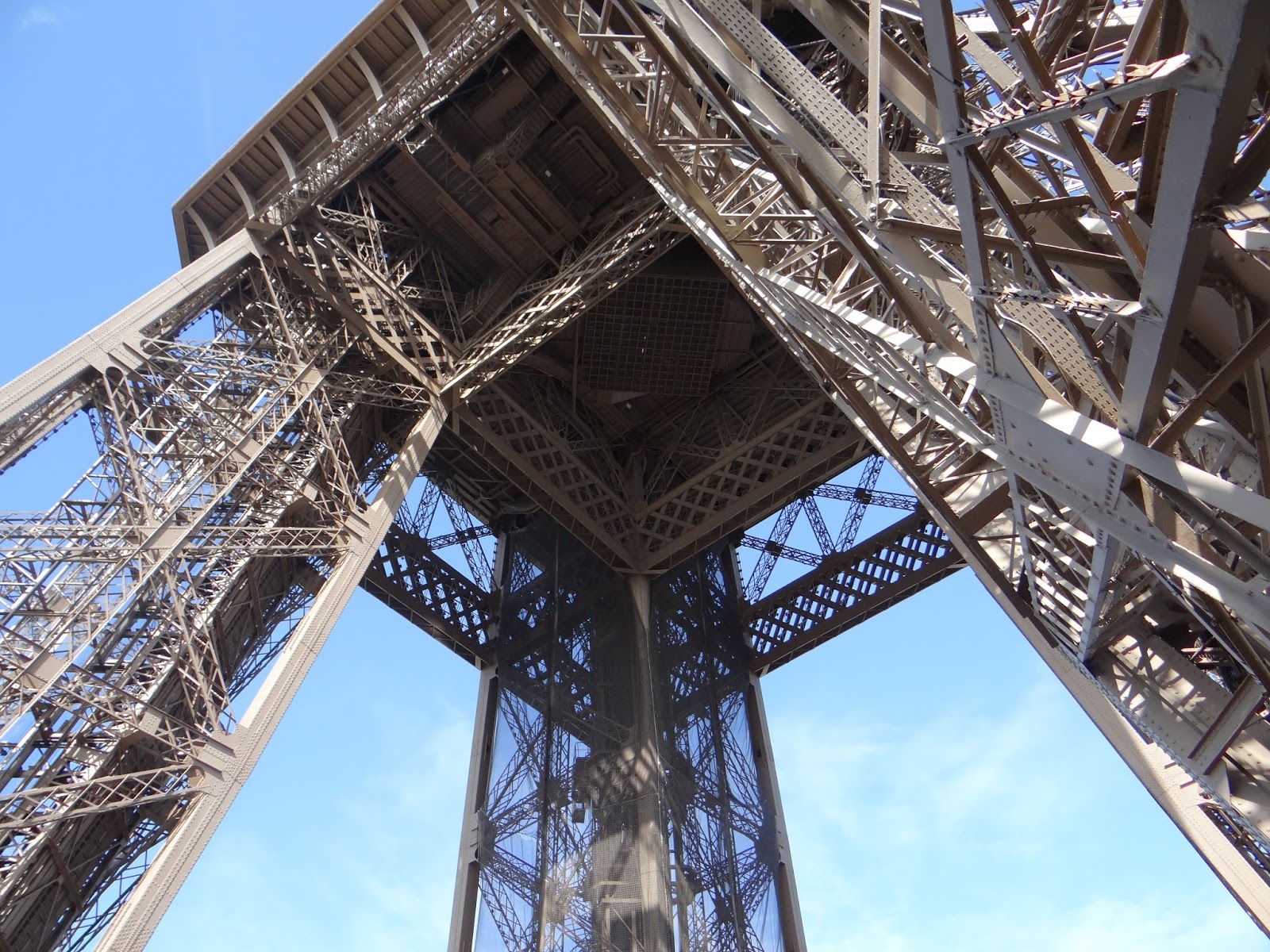
The Eiffel Tower (French: La Tour Eiffel, [tuʁ ɛfɛl]) is an iron lattice tower located on the Champ de Mars in Paris, named after the engineer Gustave Eiffel, whose company designed and built the tower. Erected in 1889 as the entrance arch to the1889 World's Fair, it has become both a global cultural icon of France and one of the most recognizable structures in the world. The tower is the tallest structure in Paris[10] and the most-visited paid monument in the world; 7.1 million people ascended it in 2011. The tower received its 250 millionth visitor in 2010.
The tower stands 324 metres (1,063 ft) tall, about the same height as an 81-storey building. During its construction, the Eiffel Tower surpassed the Washington Monument to assume the title of the tallest man-made structure in the world, a title it held for 41 years, until the Chrysler Building in New York City was built in 1930. Because of the addition of the antenna atop the Eiffel Tower in 1957, it is now taller than the Chrysler Building by 17 feet (5.2 m). Not including broadcast antennas, it is the second-tallest structure in France, after the Millau Viaduct.
The tower has three levels for visitors. The third level observatory's upper platform is at 279.11 m (915.7 ft) the highest accessible to the public in the European Union. Tickets can be purchased to ascend, by stairs or lift (elevator), to the first and second levels. The walk from ground level to the first level is over 300 steps, as is the walk from the first to the second level. Although there are stairs to the third and highest level, these are usually closed to the public and it is usually accessible only by lift. The first and second levels have restaurants.
The tower has become the most prominent symbol of both Paris and France, often in the establishing shot of films set in the city.

Enjoy the tour:


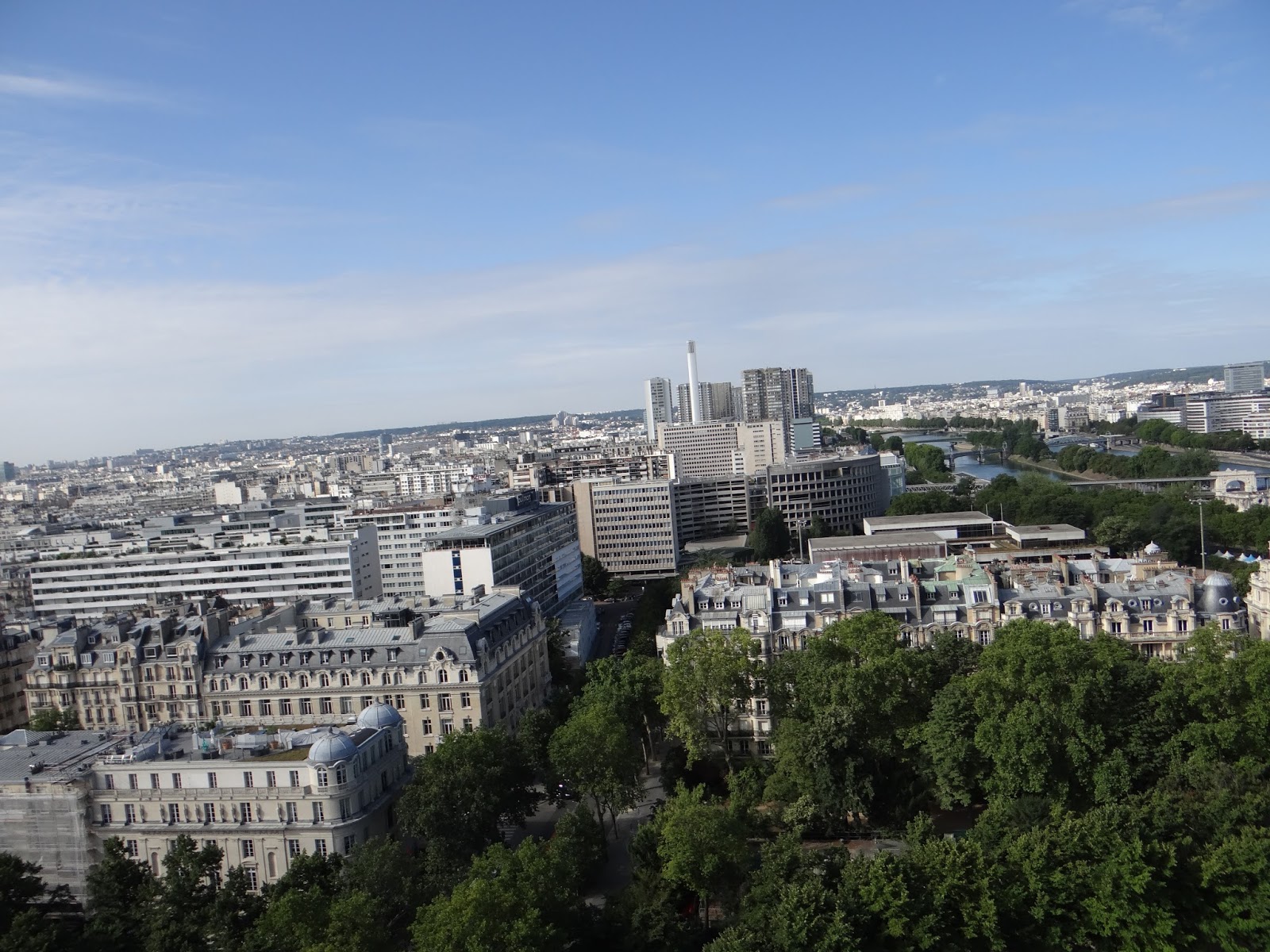
Paris view from Eiffel Tower:


Wednesday, August 28, 2013

Yoga and Healing program Cairo- Paris August 2013 with Guruwafaa for her disciples


Guruwafaa leads Yoga, Healing, Art and Metaphysical Science France August 2013


- Yoga Teacher Training Program

- Healing with Art Program

- Angelic Pilgrimage to Mont Saint Michel 


Starting the program from Cairo Air Port with Angels around us from the sky
We were blessed feeling the huge power of Angels around us 
with Guidance of Guruwafaa for the Metaphysics of Angels


Art tour to the Louvre with Guruwafaa


The group on the way up to Eiffel Tour for lunch and Meditation


The view from Eiffel Tower 


The group preparing for morning program to the Seine river for Yoga and Meditation


The group preparing for Meditation and the daily lecture by Guruwagaa during the cruise


The Seine river


Our tour guide Michel gives information about the history of Mont House
at Giverny, France


Entering Monet House before Meditation at his amazing garden


Meditation at the Lily Water garden of Monet House


Walking Meditation inside the Monet House Garden with Guidance of Guruwafaa


The museum of Impressionism at Giverny, France


In the bus to Mont Saint Michel with Metaphysical study by Guruwafaa


The way to Mont Saint Michel


Starting the walk to Saint Michel with Angelic Metaphysical guidance by Guruwagaa


The Angelic energy of Angel Michel


Climbing up to the top with Angelic Guidance by Guruwafaa


Our group in the middle preparing for group chanting under Angelic guidance by Guruwafaa


The meditation view from the top of Saint Michel with Angelic guidance by Guruwafaa


Sunset Meditation by Guruwafaa


Angelic Meditation by Guruwafaa